





This section features the research work I supervise, like dissertations and theses. I am excited to celebrate my students’ accomplishments and share exemplary architectural research. This also gives you an idea about the research focus and range of topics I am concerned with supervising. Enjoy, and give proper credit to the authors and academic institutions when you use any part of their work.
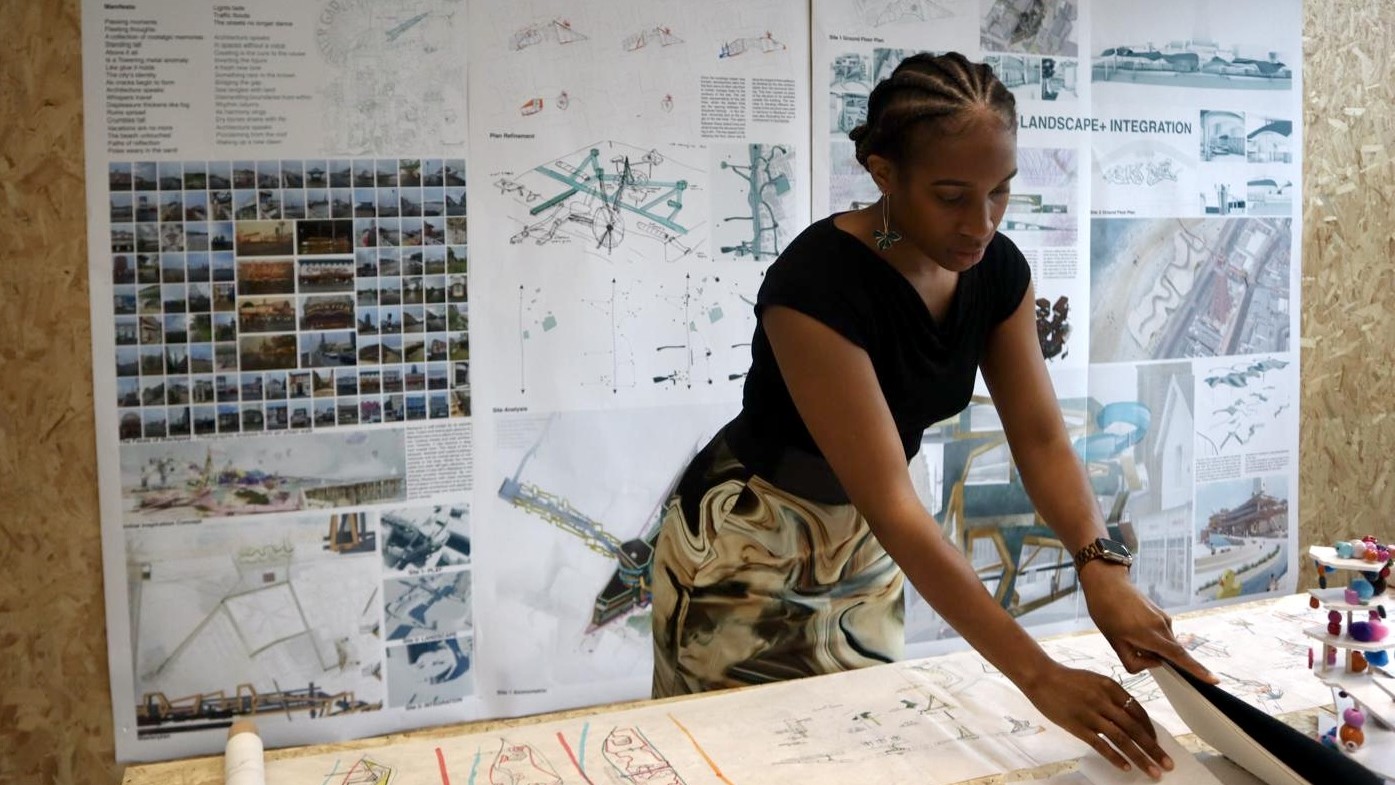
Kairah, Part II Architectural Assistant and recipient of the 2025 Innovation in Architecture Award
I’m the kind of person who is always on the go and enjoys staying busy. Whether it’s playing sports or spending quieter moments drawing or reading, I like having a variety of activities to keep me engaged.
A big part of who I am is rooted in connection and community, which stems from my upbringing in the church. I have always enjoyed bringing people together and creating spaces where people from different backgrounds can connect and feel welcome.
In many ways, this naturally shapes my creative process because I’m constantly interested in how architecture can strengthen relationships between people and place.
I recently completed my Master of Architecture with distinction at the University of Salford, where my thesis received the 2025 Innovation in Architecture Award for its imaginative approach to urban regeneration.
I currently work as a Part 2 Architectural Assistant with CHQ Architects in Hertfordshire and as a youth worker with my local council, supporting young people from a range of backgrounds. Alongside my professional work, I continue to play regional netball.
My thesis investigates the intersection of avant-garde urbanism and the economic transformations of Blackpool, a seaside town grappling with post-industrial decline. The project aims to reimagine the
town’s melancholic atmosphere by playfully integrating diverse landscapes, from the seafront to the town centre.
Through abstract elevated walkways, terraces, and interconnected public spaces, the design invites residents and tourists to move across Blackpool in new ways, transforming architectural form into an active urban landscape, reconnecting the seafront with the town centre, and creating new opportunities for interaction, exploration, and everyday public life.
A central aspect of the design is the exposure of structural frames, symbolising the potential to repurpose decaying structures and breathe new life into them. Rather than serving as a mere constructional expression, the exposed framework becomes a spatial device that connects existing places and supports new forms of public life. This approach offers a broader commentary on adaptive reuse in urban regeneration. While the design offers tangible benefits, my thesis primarily serves as a conceptual piece intended to stimulate dialogue about the economic challenges facing seaside towns and the role of innovative design in addressing them.
By encouraging interaction, openness, and a sense of belonging, playful architecture offers an alternative approach that transforms spaces from exclusionary to welcoming places for community life, with architecture serving as a medium for connecting people, places, and shared experiences.
My inspiration came from my childhood. I knew I wanted my thesis to be rooted in a memory and to have a sense of playfulness.
Visiting the seaside was a big part of our annual summer adventures growing up. As I reflected on that, I realised how rarely I visit the British seaside now. If I were to go to the beach today, I would probably choose to go abroad, which made me question why some once-well-known British seaside towns have lost their appeal. Those childhood memories gradually evolved into broader questions about why many British seaside towns have declined and how architecture might help reimagine them for future generations.
My experience working with vulnerable teenagers also encouraged me to consider how architecture can create welcoming places where people feel they belong. These ideas informed my design approach and reinforced my interest in public space as a shared social resource.
Developing this project transformed my creative process and encouraged me to conceive architectural form not as an isolated object, but as part of a connected landscape that can bring places together, invite movement, and support everyday community life.
At every stage, it prompted me to question why I made particular design decisions and how architecture might continue to serve communities long after construction.
It reinforced my belief that successful urban regeneration depends not only on buildings but on creating places that foster participation, belonging, and collective life.
This interview was published on 22 July 2026.